
Background
The City of Toronto needed a modern ticketing platform for Toronto Island Ferry service that could give residents and visitors convenient access to tickets while fitting into the City's existing technology environment.
Visionmax was selected through the City's competitive procurement process to design, implement and support the Ticketing Management Solution. The program combined Visionmax's enterprise application, integration and point-of-sale foundations with custom ferry-ticketing workflows.
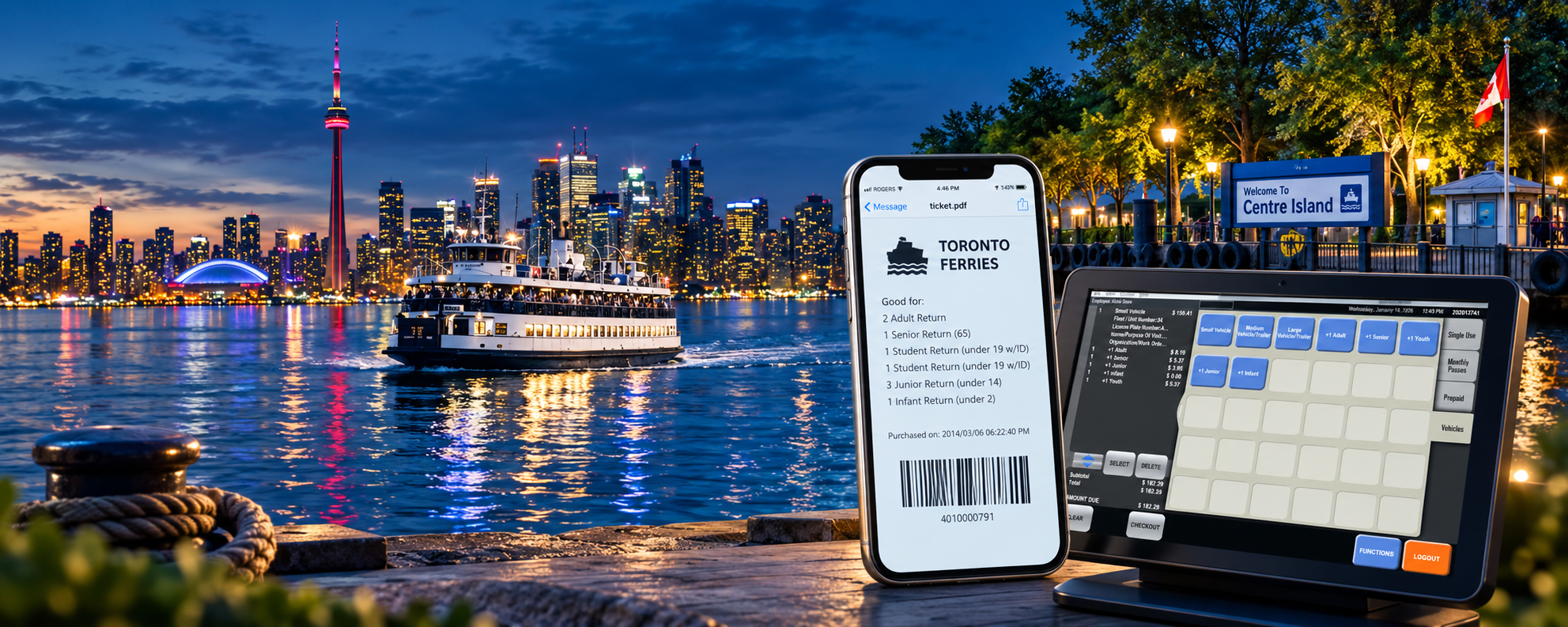
The production solution focused on web, mobile and on-site point-of-sale ticket sales. Visionmax also designed and prototyped an accessible self-service kiosk experience and worked directly with people with disabilities to evaluate accessibility and usability. That research informed the self-service design, although kiosks were not ultimately deployed as part of the production rollout.
The Challenge
Toronto Island Ferry ticketing combines public-facing commerce with operational rules that vary by ticket type, sales channel and ferry conditions. The City needed one platform that could make those rules consistent while remaining straightforward for customers and City staff.
The solution had to bring together four key requirements:
- Multiple sales channels: web and mobile purchasing for the public, plus staff-operated point-of-sale at the ferry terminal.
- Consistent transaction rules: passenger categories, bulk discounts, group tickets, validity periods, refunds and controlled ticket redemption.
- Operational control: tools for customer support, ticket resend, online-sales suspension and public advisories during high-volume periods.
- Enterprise readiness: secure payment processing, City infrastructure integration, privacy, PCI and AODA accessibility requirements.
The platform also needed to accommodate future change without forcing the City to redesign the underlying ticketing model each time business or operational requirements evolved.
The Solution
Visionmax designed and implemented a centralized ticketing platform built on its enterprise application and integration foundations, including VisionEngine, the VisionEngine Service Bus and Visionmax point-of-sale technology.
The architecture established one common transaction and rules foundation across the production channels:
- Customer channels: responsive web and mobile purchasing with electronic ticket delivery, complemented by staff-operated POS for on-site and specialized ticket products.
- Central transaction services: shared fare, discount, ticket-validity and redemption rules, with scanning controls that prevent reuse of redeemed tickets.
- Administration and operations: tools for refunds and voids, ticket resend, customer support, temporary online-sales suspension and customer advisories.
- Enterprise integration: integration with payment services, City infrastructure and required third-party systems, supported by structured development, testing/training and production environments.
Visionmax also developed and tested an accessible kiosk prototype with people with disabilities as part of the project's accessibility research. The live production deployment remained focused on web, mobile and POS.
The Results
The Toronto Island Ferry Ticketing platform gave the City a common application foundation for public ticket sales and staff-operated ticketing, replacing channel-specific processes with centrally managed transaction rules and administration.
The platform delivered several practical outcomes:
- More convenient customer access: passengers can purchase general ferry tickets online or from mobile devices before arriving at the terminal, while on-site POS continues to support walk-up and specialized ticket sales.
- Consistent rules across channels: fare categories, bulk-purchase discounts, group-ticket handling, ticket validity and redemption logic are managed from one core platform rather than being recreated independently for each channel.
- Controlled digital redemption: tickets are validated and marked as redeemed when scanned, helping prevent duplicate use while supporting faster processing at the terminal.
- Stronger customer-service tools: authorized staff can find orders, resend tickets, handle approved voids or refunds and assist customers when delivery information is incorrect.
- Operational flexibility: ferry staff can pause online sales or publish customer advisories during high-volume periods without taking the entire customer experience offline.
- Accessibility-informed design: kiosk prototyping and direct usability work with people with disabilities contributed to a more informed approach to accessible self-service, even though kiosks were not part of the final production deployment.
- A foundation for ongoing change: the original architecture separated customer channels from the central transaction, integration and administration services. That design gave the City and Visionmax a stable foundation for subsequent enhancements, operational changes and technology transitions over the years while continuing to preserve the core design principles and transaction model established at the beginning of the project.
The result is a robust sales platform for any type of ticket-sales. It is a reusable municipal commerce platform that combines customer convenience, staff controls, enterprise integration and long-term adaptability for a seasonal, high-volume public transportation service.